Categories
HOOZA NEWS AGENCY

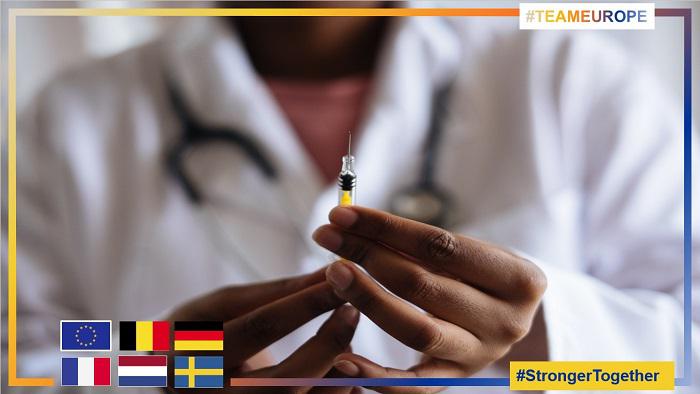
#TeamEurope supports COVID-19 vaccine development and distribution to Rwanda

#TeamEurope (EU and Member States) welcomes the announcement by Gavi on the first delivery of vaccines via the COVAX facility. Rwanda will receive a first 1.1 million doses of the COVID-19 vaccine in the first quarter of 2021.

#Team Europe has substantially contributed to the COVAX facility, pledging over €850 million to help secure 1.3 billion doses of vaccination for 92 low and middle-income countries, including Rwanda.  

By the end of February, Rwanda is expected to receive 996,000 doses of the AstraZeneca/Oxford vaccine and 102,960 of the Pfizer-BioNTech vaccine.

Team Europe commends Rwanda for its preparedness to receive the vaccines, including the required setting up and management of the ultra-cold chain.

EU Ambassador Nicola Bellomo said; “This is a visible demonstration of our engagement to support equal and global access to a safe and efficient vaccine for everyone in the world. No region of the world is safe until we are all safe COVAX is and remains the best vehicle to ensure international vaccine solidarity and will be key to help end the acute phase of the pandemic.

The EU has been leading efforts to accelerate the development, manufacturing and deployment of vaccines against COVID-19 internally, and has been a key initiator of the global framework, together with the World Health Organisation (WHO) and international health organizations, to accelerate the research and development of COVID-19-vaccines, tests and treatments and a top contributor from the start to COVAX.

The COVAX Facility – co-led by the Gavi Vaccine Alliance, the Coalition for Epidemic Preparedness Innovations (CEPI) and the WHO – aims to accelerate the development and manufacture of COVID-19 vaccines and to guarantee fair and equitable access for every country in the world. All COVAX participant countries will receive individual allocations of vaccine doses totalling 147 million doses by June 2021. By the end of the year, COVAX has already secured 1.6 million doses and expects to increase this number to reach 2.3 billion.

press@hooza.rw

Categories
HOOZA NEWS AGENCY

The crucial role of network slicing in realizing the full potential of 5G

By Zoran Lazarevic, Chief Technology Officer at Ericsson Middle East and Africa

The digital era has the potential to transform industry and society, and with the introduction of 5G around the world, countless new business models have become a possibility. New-generation technology and services come with their unique connectivity and performance-related challenges. So, communication service providers (CSP) need efficient and flexible technologies to meet the demands of these new services.

This is where network slicing comes in – providing the capability to enable new business models across a broad industry spectrum. This solution allows operators to segment the network to support particular services and deploy multiple logical networks for different service types over one common infrastructure.

With the combination of 5G and network slicing, CSPs can offer new services, such as augmented reality (AR), virtual reality (VR), and real-time automation, with guaranteed performance to the enterprise and mobile broadband (MBB) market segment. In doing so, access to potential new sources of revenue, and improved ways to support their customers, will open up.

5G RAN slicing for next-level services

In the era of industry digitalization, efficient solutions are needed to address simultaneously services that need high bandwidth and services with low latency or ultra-reliability. These new services will have different/unique performance requirements characterized through the service level agreements (SLA). The CSPs need the capability to guaranty fulfillment of SLAs while creating end-to-end that spans over the radio access network (RAN), core network and transport network. The ability to monitor and control performances in the RAN is the vital part and this is where the 5G RAN slicing solution comes to play.

The 5G RAN slicing solution allows for the slice-aware observability, dynamic radio resource partitioning on a 1ms level, quality of service, and slice orchestration functionality. This way, service providers can deliver SLA based 5G slices to drive innovation in smart manufacturing, healthcare, online gaming and other emerging enterprise and MBB use cases.

RAN slicing builds on existing 5G network investments and secures the efficient allocation of limited radio resources to facilitate the creation of next-level services while guaranteeing the fulfillment of SLAs. RAN slicing will considerably shorten time-to-market and improve the total cost of ownership for the CSPs when offering the new services.

In offering the new services, CSPs are initially focusing on augmented reality (AR), virtual reality (VR), cloud gaming, and other MBB-based use cases in the consumer market segment. As end-to-end network slicing matures, use cases will continue to grow both in number and complexity. Examples in the enterprise verticals already include smart surveillance, real-time automation and remote operation. Strong interest has been observed in tailor-made slices for the financial services sector in certain Asian countries.

With the increased number of slices, created for various use cases, complexity will also increase. This increased complexity will demand end-to-end slice orchestration and automation to carry out slice lifecycle management.

RAN slice orchestration is part of end-to-end slice orchestration, enabling automation of slice lifecycle management tasks such as slice provisioning, activation, supervision and service assurance.

Ericsson RAN slicing solution enables service providers to offer differentiated handling of new services with respective quality of service and radio resource management for SLA fulfillment. What’s more, our solution is scalable and flexible enough to support a growing number of slicing use cases with faster time to market.

Ericsson network slicing solution provides the opportunity to monetize CSPs 5G investment and open the door for the new revenue streams from enterprise and MBB segment. The objective is to achieve full dynamic orchestration of end-to-end slicing with optimal automation.

For more information on this topic, read our latest paper in which we discuss the importance of RAN slicing in delivering on the promise of 5G.

Download the 5G RAN slicing report here

Categories
HOOZA MEDIA

Hooza Media launches podcast platform in French!

Kigali, February 4, 2021, Hooza Media has launched Hooza Podcast, a mobile podcast application available on Android and IoS.

Hooza Podcast is downloadable under the following link https://hoozapodcast.glideapp.io

The application is free and the content offered is free to access.

On the occasion of this launch, Hooza Media is set to broadcast the audio version of the book « Bisesero, le Ghetto de Varsovie Rwandais » by French writer Serge Farnel.

The book was published in 2014 and it will be read by the author in Hooza Media studios.

This audiobook will be available in 15-minute episodes published every 2 days on the platform, allowing listeners to continue listening to this story directly and for free on their phones for several weeks.

Testimonies from genocide survivors in Bisesero will also be posted online to allow listeners to be fully occupied and to help them better understand this so sensitive part of the history of the genocide against the Tutsi in Rwanda.

With each of these podcasts, a button will allow listeners to make a donation to foundations chosen for their determination, both to help survivors of the genocide and to fight against any form of denial against this genocide.

This approach is non-profit and aims to reach French-speaking communities in Rwanda, Africa and around the world.

About Hooza Media:

Hooza is a digital media founded in 2013 in Rwanda with a regional office in Dar Es Salaam, Tanzania. Hooza operates in 10 African countries and supports African governments as well as international organizations in their institutional communication for the greatest number via the mobile phone, the leading medium in Africa.

About Serge Farnel:

French engineer (aeronautics and space), professor and writer, Serge Farnel devotes ten years of his life to fighting, as a journalist, against denial of the genocide perpetrated against the Tutsi in Rwanda.

Invited by the CNLG (National Commission for the Fight Against Genocide), then headed by Jean de Dieu Mucyo, to speak in April 2009 on the occasion of the 15th international symposium, he took the opportunity to collect testimonies that put him on the track of an active participation of whites in the biggest anti-Tutsi massacre: that of May 13, 1994 in Bisesero.

To fully document the testimonies, Jean de Dieu Mucyo and Tharcisse Karugarama (then Rwandan Minister of Justice) encouraged him to return to continue his investigation, which Farnel did in the presence of a journalist from the Wall Street Journal.

The site www.bisesero.net gathers information relating to Serge Farnel’s investigation.

Categories
CULTURE & ACTU

La résistance de Bisesero (Rwanda) vous est racontée : un rendez-vous très attendu avec l’Histoire

À l’occasion du lancement de Hooza Podcast*, Hooza Media annonce la diffusion, à partir de ce vendredi 5 février, de la version audio du livre «  Bisesero, le Ghetto de Varsovie Rwandais  » de l’écrivain français Serge Farnel : des épisodes de 15 minutes, diffusés tous les 2 jours sur la plateforme, permettront aux auditeurs francophones de poursuivre, pendant plusieurs semaines, l’écoute de ce récit directement et gratuitement sur leur téléphone. Des témoignages de rescapés et d’anciens génocidaires, racontant notamment la participation de Blancs au grand massacre du 13 mai 1994 à Bisesero [Ouest du Rwanda], seront par ailleurs mis en ligne afin de permettre une véritable immersion des auditeurs, les aidant à mieux s’imprégner de cette partie ô combien sensible de l’Histoire contemporaine. Igihe s’est entretenu avec Serge Farnel au sujet de ce lancement.

Igihe : Pourquoi proposer une version audio de votre livre ?

Serge Farnel : C’est une façon de permettre au plus grand nombre d’accéder à ce pan essentiel de l’Histoire contemporaine africaine qu’a constitué cette ultime résistance de civils tutsi au dernier génocide du 20e siècle. Cet acte inouï de bravoure eut lieu dans les hautes collines de Bisesero, dans l’ouest du Rwanda. Cette histoire nous concerne tous, que nous soyons rwandais ou non, que nous vivions en Afrique ou non.C’est notre Histoire à tous. Or tout le monde ne lit pas ou ne peut pas facilement se concentrer sur la lecture d’un récit aussi dense. Aussi, quand Victor Nkindi, le fondateur de Hooza Media, m’a suggéré de l’enregistrer dans ses studios, j’ai trouvé l’idée formidable.

Quand avez-vous réalisé cet enregistrement ?

En 2014, alors que je présentais ce livre au Rwanda à l’occasion de la 20e commémoration du génocide. Tout le monde était alors regroupé dans la capitale. Je m’étais, pour ma part, rendu à Bisesero car je tenais à être aux côtés des Basesero[Habitants de Bisesero] ce jour-là.

On se souvient que des rescapés du grand massacre du 13 mai à Bisesero étaient venus, cette année, au mémorial de Kigali, témoigner de la participation active de Blancs à ce massacre.

Oui, les caméras de la télévision rwandaise étaient là également et les téléspectateurs rwandais ont pu les voir et les entendre parler de ces Blancs du 13 mai dans ce lieu haut en symbole. Quant au public présent, ils ont pu poser toute les questions qu’ils désiraient alors poser. C’était un moment important pour ces rescapés.Siméon Karamaga, chef adjoint de la résistance civile de Bisesero, racontant avoir vu des Blancs se réunir le 12 mai 1994 avec ses assassins à Ruhuha (Bisesero).

Expliquez-nous comment les auditeurs vont pouvoir écouter ce récit.

Victor Nkindi a tenu à le rendre accessible à tous facilement et gratuitement. Les futurs auditeurs n’auront ainsi qu’à cliquer sur un lien [https://hoozapodcast.glideapp.ioqui installera sur leur téléphone mobile une nouvelle icône, « Hooza podcast  », leur permettant, une fois tous les deux jours, d’écouter gratuitement 15 minutes de la narration de cette histoire.

Une sorte de rendez-vous réguliers, en somme ?

C’est exactement ça. Et bien sûr, si vous n’avez pas pu écouter l’épisode précédent, vous le trouverez sur la plateforme de Hooza.

La particularité de ce récit, c’est qu’il s’appuie sur de très nombreux témoignages, c’est bien cela ?

Très nombreux, oui. Il s’agissait en effet de construire le récit le plus complet possible de l’Histoire du génocide à Bisesero. Ces témoignages, je ne suis pas le seul à les avoir recueillis. Je m’appuie ainsi sur de très nombreuses sources : African Rights, Commission Mucyo, reportages journalistiques, autres enquêteurs …

La particularité des témoignages que vous avez vous-mêmes recueillis, c’est toutefois qu’ils concernent la participation directe de Blancs au massacre du 13 mai qui fit près de 50 000 victimes civiles à Bisesero.

Tout à fait. Mais je ne suis pas le seul à en avoir recueillis. Il y a ainsi ceux recueillis par un deuxième enquêteur qui est d’ailleurs, comme il l’explique en détail dans un article, retombé par hasard sur cette participation, et ce par un canal tout à fait différent du mien. J’ai appris qu’il avait enfin récemment pu revenir au Rwanda. Et puis un troisième enquêteur qui a également confirmé cette présence de Blancs le 13 mai.

J’ai toutefois été informé qu’il était interdit, depuis quelques années, d’interroger des rescapés de Bisesero en dehors d’une liste restreinte de témoins qui n’ont, eux, pas vu ces Blancs du 13 mai. Ceci n’a pas manqué de surprendre, il y a deux ans, un journaliste français de RFI qui en a alerté les auditeurs sur les ondes de la radio française. Mais je ne doute pas que les choses vont évoluer, et ce paisiblement. Le Rwanda est trop attaché à l’entière vérité pour passer, même partiellement, à côté de son Histoire.

D’autant que la présence de ces Blancs le 13 mai avec des armes lourdes signe l’incroyable courage de ces civils tutsi hors du commun, en ce que ce fut là le seul moyen de venir à bout de leur résistance. Aussi, poser entièrement leur Histoire est un hommage dont on ne doit pas les priver. C’est un devoir que nous avons tous vis-à-vis d’eux.

Pour en revenir aux témoins que j’ai interrogés moi-même, j’y inclue aussi ceux que j’ai recueillis et qui ne mentionnent pas les Blancs du 13 mai, soit parce que leur témoignage concerne un autre endroit, soit parce qu’il n’en ont pas vus eux-mêmes ce jour-là à Bisesero.

Le récit ne concerne donc pas que Bisesero ?

En fait si, mais on ne peut pas saisir ce qu’il s’y passe sans comprendre ce qui amène tant de Tutsi à progressivement rejoindre cet endroit. Or pour cela, il faut également raconter ce qu’il se passe dans la ville de Kibuye située en contrebas des hautes collines de Bisesero, ville que certains Tutsi vont parvenir à fuir pour éviter d’être massacrés dans les stades ou les églises.

Et si on parle, par exemple, du stade de Kibuye, il nous faut comprendre comment les génocidaires sont parvenus à les y regrouper. Cela nous amène dans une autre commune, celle de Mabanza, où l’on suit une famille forcée de faire une marche d’une vingtaine de kilomètres à pieds pour rejoindre ce stade. Elle va y entrer alors que s’y trouve (ou s’y trouvera, je ne me souviens plus qui y arrive en premier) une autre famille que l’auditeur suit parallèlement, mais qui, elle, habitait en face du stade.

C’est ça, l’esprit du récit : avoir les yeux partout et tout le temps pour être en mesure de construire ces événements dans ses plus fins détails, aussi bien dans l’espace que dans le temps.

Vous disiez également, pour ce qui concerne les témoignages du 13 mai, que vous incluez ceux qui n’ont pas vu de Blancs ?

Oui, et ce dans le même esprit que ce que je viens de vous expliquer. Il faut savoir que même si un nombre significatif de rescapés témoignent de la présence de ces Blancs le 13 mai, ce nombre reste probablement très faible en pourcentage de l’ensemble des rescapés de Bisesero.

Et pour cause : quand bien même leur présence fut déterminante, ces Blancs pourraient bien n’avoir été qu’entre vingt et quarante, au milieu d’une foule de milliers de génocidaires rwandais, militaires, milices Interahamwe ou encore paysans hutu. Or les Tutsi couraient pour échapper au feu des armes lourdes et des mitraillettes, pour échapper aux grenades et aux machettes. Tous n’ont dès lors bien sûr pas été en mesure de les apercevoir.

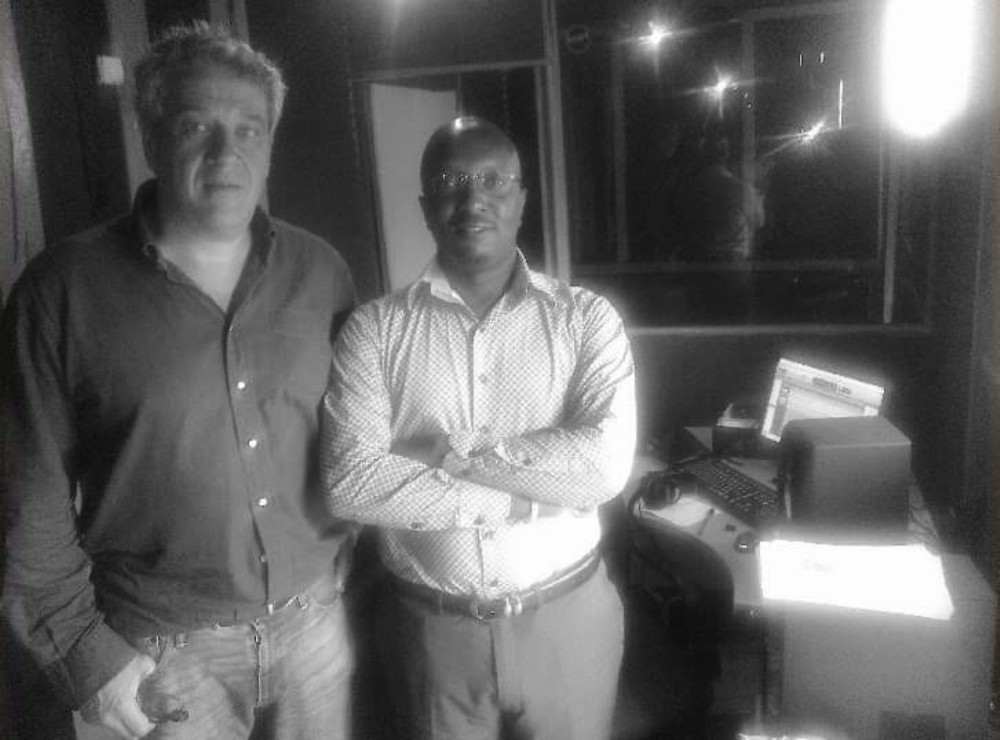
C’est l’occasion de dire que si vous ne cherchez pas à rencontrer ceux susceptibles de témoigner de leur présence, vous ne tomberez qu’avec peu de chance sur ce type de témoignage, d’autant qu’un rescapé les ayant vus ne vous livrera pas nécessairement spontanément une information dont il ignore qu’elle vous importe. Mais heureusement, il en reste suffisamment qui peuvent témoigner de leur présence et qui d’ailleurs l’ont déjà fait.Serge Farnel et Victor Nkindi dans les studios d’enregistrement de Hooza Media

Comment le public a-t-il réagi à cette information de la participation active de Blancs à ce grand massacre ?

Dès lors que l’on prend le temps de se confronter à ces témoignages, on ne peut pas faire grand-chose d’autre que d’accepter de prendre en compte ce qu’ils nous disent. Il y a toutefois probablement eu, pour certaines personnes, une phase de sidération, voire d’impossibilité à faire face à une telle information, d’autant plus s’ils ont été sous l’influence de cette tentative, un temps, de disqualifier les témoins qu’on est allé jusqu’à calomnier !

J’ai cependant, depuis que j’en ai été informé, publié sur le site web de l’enquête [www.bisesero.net] les éléments permettant de mettre un terme à cela. On va considérer que cela aura fait partie du chemin que doivent emprunter les faits dans leur marche vers l’Histoire et que le proverbe rwandais résume à sa façon : « La vérité traverse l’épreuve du feu sans se consumer. »

En revanche, il est légitime de se demander comment la présence de Blancs au massacre du 13 mai n’aura été inscrite dans l’Histoire que si longtemps après les faits, et notamment après la commission Mucyo [Commission rwandaise chargée de rassembler les preuves de l’implication de la France dans le génocide, ndlr]

Je l’ai expliqué sur le site de l’enquête ainsi que dans mon premier livre. Il se trouve que j’ai accompagné, en tant que journaliste, cette commission en décembre 2006 à Bisesero. Elle a concentré son enquête sur les trois jours du 27 au 30 juin 1994 de l’opération Turquoise [mission officielle française ayant débuté le 22 juin 1994 au Rwanda, ndlr], ce qui se comprend dès lors que sa mission était de rassembler les preuves de l’implication de la France dans le génocide.

Il lui fallait donc se concentrer sur les dates des missions officielles françaises. Aussi elle a fait exactement ce pour quoi elle avait été missionnée. Et elle l’a fait d’une manière admirable. Sur ce point, le travail qu’a fourni cette commission est, pour l’Histoire, exceptionnel. Mon enquête a démarré, elle, un an après la publication de son rapport, et j’ai aussitôt prévenu M. Mucyo de ce que je venais de découvrir.

Quand précisément l’avez-vous informé ?

Juste après avoir enregistré les premiers témoignages de la présence de Blancs les 12 et 13 mai à Bisesero. De retour à Kigali, la première chose que j’ai faite est de prévenir par téléphone un des commissaires de la commission Mucyo, après quoi j’ai appelé son président, autrement dit Jean de Dieu Mucyo lui-même, qui était alors secrétaire exécutif de la CNLG [Commission nationale de lutte contre le génocide]. Ce dernier a immédiatement tenu à me rencontrer. M. Mucyo et moi-même avons alors longuement discuté pour essayer de comprendre qui pouvaient bien être ces Blancs.

Après avoir analysé les rushes dont je lui ai laissé une copie dans un souci de totale transparence, il m’a demandé de revenir pour poursuivre mon enquête, allant jusqu’à participer, avec Tharcisse Karugarama, alors ministre rwandais de la Justice, à son financement. Quand il me l’a demandé, je n’ai senti aucune gêne de sa part. Il avait, au cours des deux années qui précèdent, enquêté avec son équipe sur la partie qui lui avait été confiée. Quant à moi, je ne faisais qu’amener un élément supplémentaire relatif à une période située, elle, en dehors des missions officielles françaises. En effet, le grand massacre de Bisesero a eu lieu le 13 mai, autrement dit après la fin de l’opération française Amaryllis d’évacuation des Occidentaux (15 avril) et avant le début de l’opération française Turquoise (22 juin), mission présentée comme humanitaire.

Revenons au récit que vont entendre les auditeurs. Vous expliquez dans votre livre que ce n’est pas votre livre, mais celui des témoins. Expliquez-nous.

Ce n’est pas juste une formule : c’est la nature même de ce récit. Le texte a, pour une grande partie, été construit avec les mots des témoins. J’ai pris soin de rester au plus près de leur parole. Concrètement : une phrase peut être constituée par un ou plusieurs extraits de leur témoignage, ce afin de tendre vers un observateur qui aurait vu la scène sous plusieurs angles, ce qui n’est évidemment pas possible pour une seule personne.

J’ai enfin pris soin de rester au plus près de leurs mots en préservant aussi bien le contenu de leur récit que leur façon de le raconter. Quand on me dit qu’un « gros fusil » parvenait à envoyer des balles qui faisaient « trembler la colline », je ne traduis pas cela en parlant d’un tir à l’arme lourde, mais je laisse les choses ainsi. Aussi ce récit est-il vraiment le leur. J’ajoute enfin que toutes les traductions ont été vérifiées mot à mot par des Rwandaises (sept Rwandaises ont participé à ce formidable travail).

Le livre est par ailleurs très sourcé.

Toutes les phrases de ce récit sont associées à une note en fin d’ouvrage. Lorsqu’il m’arrive de faire une analyse personnelle, la note indique « note de l’auteur ». Aussi le lecteur sait d’où vient tout ce qui est écrit. Les auditeurs doivent donc savoir que tout ce qu’ils vont entendre est sourcé.

Donc, des épisodes de 15 minutes tous les deux jours. Cela nous amène jusqu’à quelle date ?

Fin de l’année.

Qu’attendez-vous de cet événement ?

Qu’il contribue à faire connaître ce pan de l’Histoire à mes contemporains, tout en espérant que le Rwanda fera ce qu’il faut, avant qu’il ne soit trop tard, pour ne pas laisser les génocidaires blancs du 13 mai impunément en liberté, et ce qu’il soient français ou non, qu’ils aient alors été des soldats en active dans l’armée ou bien des mercenaires. Qu’importe ! Mais cessons de perdre du temps. Ils doivent rendre des comptes.

Une des pistes sérieuses est celle des hommes du mercenaire Paul Barril qui ont probablement fait partie de ce groupe de génocidaires. Un certain nombre éléments factuels le laissent penser. Et ces hommes sont identifiables. On parle tout de même de cinquante mille civils massacrés en une journée ! Ne l’oublions pas. Notre responsabilité à ne pas agir est énorme devant l’Histoire.

*Hooza Podcast est une application gratuite au contenu proposé libre d’accès, téléchargeable sous le lien https://hoozapodcast.glideapp.io
Site web de l’enquête : www.bisesero.net

Lisez l’article originale https://fr.igihe.com/spip.php?page=mv2_article&id_article=29607

Categories
HOOZA MEDIA

UGOLF signs contract to manage Kigali Golf Resorts and Villas, says Director General

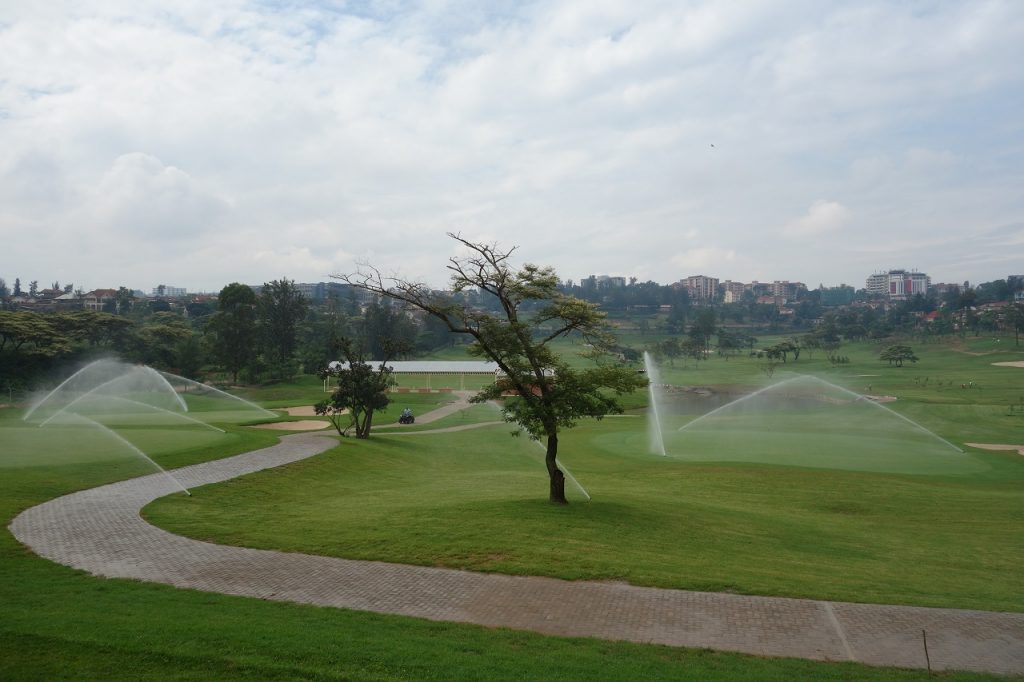
UGOLF has signed the management contract for its first golf course in Africa, in Kigali, Rwanda. The Kigali Golf Resorts and Villas, still under construction, will open in early May 2021.

Kigali Golf Resort and Villas is located in the heart of the Rwandan capital, in a quality natural environment, on 65 hectares.

Previously composed of 9 holes played mainly by local golfers, its course has been extended to 18 holes and completely redesigned by Gary Player Design.

The French company Grégori International, in charge of the works, began construction in August 2019.

TOP AFRICA NEWS has exclusively learnt that in addition to golf, the Kigali Golf Resort and Villas will offer many activities: tennis, squash, health club, boutique, seminar spaces, as well as a restaurant serving original local cuisine.

As soon as the golf course opens, the UGOLF Academy will offer its flagship product for beginners, the Swing 4U, at an attractive price allowing new clientele to be introduced to become future subscribers of Kigali Golf Resort and Villas. The Golf School will aim to introduce golf to all children and to develop young champions.

AN ENVIRONMENTALLY FRIENDLY GOLF

Faithful to its eco-sustainable commitments, UGOLF is fully in line with the country’s approach to managing the course that respects the environment: a policy of “fair watering”, particularly in the dry season, and mechanical operations on the greens for minimum use of chemical inputs.

A GOLF ACTOR IN THE ECONOMIC AND TOURIST DEVELOPMENT OF THE COUNTRY

Thanks to a strategic geographical location, high-level infrastructure and recognized economic dynamism, Kigali is the second most attractive city in Africa for international meetings and events.

 To develop international golf attendance, the Kigali Golf Resort and Villas, a project supported by the Rwanda Ultimate Golf Club, will maintain close collaboration with the Rwanda Development Board in association with all the country’s tourism development stakeholders.

Finally, around golf, a network of business and golf enthusiasts, “the Kigali Golf 42.67 business”, will help anchor golf at the heart of the capital’s economic dynamic.

Pierre-André UHLEN, Managing Director of UGOLF, declares: “We are very proud to have crossed European borders with the signing of Kigali Golf Resorts & Villas. This is great proof of the strength of UGOLF, which is continuing its internationalization to achieve our goal of entering the World Top 10 golf operators by 2024 “.

Read the original story here: https://www.topafricanews.com/2021/02/02/ugolf-signs-contract-to-manage-kigali-golf-resorts-and-villas-says-director-general/

Categories
HOOZA NEWS AGENCY

Ericsson reports major achievements as Fourth quarter and Full year 2020 Statistics are released

Ericsson, a company that specializes in communications technology and services with headquarters in Stockholm, Sweden, has released a quarterly report on the company’s business and investment figures for the full year 2020

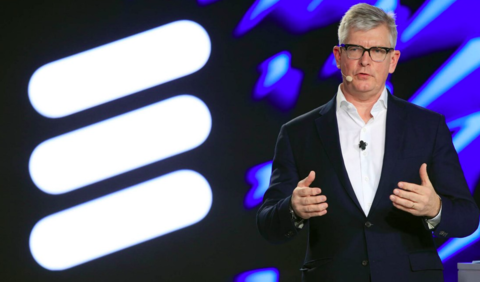
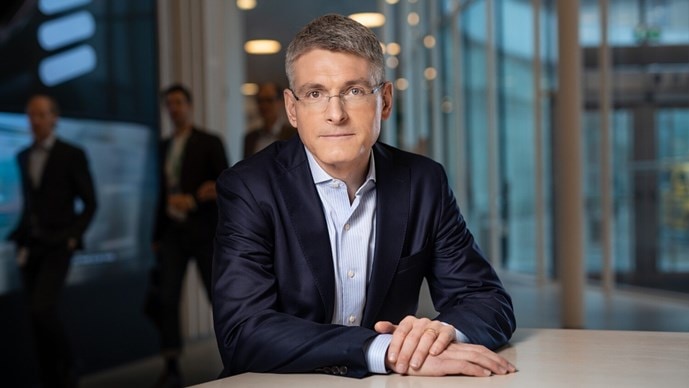
There are exciting statistics, according to Börje Ekholm, President and CEO of Ericsson

Commenting on the report, Börje Ekholm said “As we navigate through the pandemic, health and well-being of our colleagues, customers and partners is our number one priority.”

He explains that “Despite the challenges, our people continued to deliver and to serve our customers with very limited disturbances. Our R&D investments have continued to drive both technology leadership and cost efficiency which have led to increased market share and improved financial performance.”

“We are today a leader in 5G with 127 commercial contracts and 79 operating networks around the world.” Börje Ekholm adds

According to statistics, Ericsson Organic sales grew by 5% for the full year 2020. The company’s operating margin of 12.5% (5.0%) exceeded the 2020 target and reached the 2022 Group target range two years early.

Networks sales grew organically by 20%, reporting a gross margin of 43.5% (41.1%) for Q4. This reflects continued high activity levels in North America and North East Asia, and also in Europe where Ericsson further increased market share.

The report shows that Networks delivered an operating margin of 19% for full-year 2020 – well above the 15%-17% target.

“Investing in R&D is fundamental to our strategy. Since 2017 we have increased R&D investment by SEK 10 b. and delivered SEK 16 b. of improved operating income. Our growth during 2020 is built on a strong and competitive 5G portfolio.” Börje Ekholm, Ericsson President and CEO reveals.

Ericsson Digital Services gross margin grew to 41.0% (38.1%) in Q4. From 2017 to 2020, gross margin excluding restructuring charges and items affecting comparability increased from 29% to 42%, as a result of streamlined product portfolio, fewer critical contracts, a growing portion of software sales and lower service delivery costs.

Börje Ekholm
President & CEO of Ericsson

“We continue to execute on the turnaround plan and the operating income of SEK 0.5 b. in Q4 is the best quarterly result to date. The cloud-native 5G portfolio has a high win ratio and significant new customer contracts will start to generate revenues during the next 12-18 months. By selective R&D investments to accelerate our growth portfolio, we aim to capture further opportunities.” Says the President of Ericsson

Managed Services delivered a gross margin of 17.7% (15.4%) in Q4. Sales declined on operator consolidation in the US during 2020. The full-year 2020 operating margin was 8.1% – above the 5%-8% target. We expect the margin profile to improve further with increasing sales of our Operations Engine with its high value-added services, driven by R&D investments in AI and automation. We see increasingly positive response from customers to our new portfolio.

Emerging Business and Other sales are growing in enterprise offerings such as IoT Platforms, complemented by the acquisition of Cradlepoint.

 Gross margin improved to 33.8% (15.1%) driven by operational leverage from growth and lower cost as a result of the exited Edge Gravity business.

Cradlepoint drives new revenues for mobile service providers and strengthens Ericsson position in the 5G enterprise market, alongside our existing Dedicated Networks and IoT portfolio.

The underlying business in Cradlepoint develops according to plan.

However, reported sales and costs for Cradlepoint are impacted by purchase price allocations and during 2021 the operating margin is expected to be negatively impacted by approximately -1 percentage point due to amortization of intangibles and increased cost for market expansion.

5G acceleration

Börje Ekholm noted that “The pandemic has fast forwarded the digitalization of societies, including remote working, by months if not years. A resilient digital infrastructure is critical. We see more signs that countries and enterprises see 5G as a key access technology, with increasing deployment speed in Australia, the Middle East, North East Asia and the US. The pandemic has exposed the digital divide and rapid deployment of 5G is a fast way to bridge the divide.

According to Ericsson President “The Swedish telecom regulator’s decision to exclude Chinese vendors from 5G networks may create exposure for Ericsson operations in China.”

Our business in 180 markets today has been built on free trade and open, competitive markets. This has also ensured the development of a single global standard for mobile communication. It is critical that responses to the geopolitical situation safeguard the extraordinary value associated with those operating standards for 5G and beyond.” He said

During 2020, Ericsson further reinforced its strong commitment to ethics and compliance.

The company increased the investment with the recruitment of additional dedicated resources and the deployment of new or revised processes and controls.

“As a vital cornerstone, we put focus on establishing a durable ethical culture that is built on individual accountability for responsible business practices. The ongoing independent monitorship is providing valuable contributions to achieving our ambition.” Börje Ekholm said

“Long-term business fundamentals remain strong and we will continue to invest in further strengthening our portfolio and growing our global footprint. While we expect temporary negative impact during 2021 from IPR renewals, Cradlepoint and investments to strengthen our long-term business, we remain fully committed to the 2022 target as a milestone towards the long-term target of 15%-18%.” Börje Ekholm assured

Fourth quarter highlights

  • Sales adjusted for comparable units and currency grew by 13% YoY mainly driven by sales in North East Asia, Europe and North America. Reported sales were SEK 69.6 (66.4) b.
  • Gross margin excluding restructuring charges improved to 40.6% (37.1%) with margin improvements in all segments. Reported gross margin improved to 40.6% (36.8%).
  • Operating income excluding restructuring charges improved to SEK 11.0 b. (15.8% operating margin) from SEK 6.5 b. (9.7% operating margin) mainly driven by Networks. Reported operating income was SEK 11.0 (6.1) b.
  • Networks sales increased by 20% YoY, adjusted for comparable units and currency. Operating margin excluding restructuring charges was 21.5% (14.5%).
  • Reported net income was SEK 7.2 (4.5) b.
  • Free cash flow before M&A was SEK 12.8 (-1.9) b. Q4 2019 included a payment of SEK 10.1 b. related to the resolution of the US SEC and DOJ investigations. Net cash Dec 31, 2020, was SEK 41.9 (34.5) b. 

Full-year highlights

  • Sales adj. for comp. units and currency grew by 5%, with Networks growing by 10%. Reported sales increased by 2% to SEK 232.4 b.
  • Gross margin excl. restructuring charges was 40.6% (37.5%), with improvements in all segments.
  • Reported operating income improved to SEK 27.8 (10.6) b.  
  • Reported net income was SEK 17.6 (1.8) b.
  • Free cash flow before M&A amounted to SEK 22.3 (7.6) b. Full-year 2019 included a payment of SEK 10.1 b. related to the resolution of the US SEC and DOJ investigations.
  • The Board of Directors will propose a dividend for 2020 of SEK 2.00 (1.50) per share to the AGM.

Planning assumptions highlights (please see the quarterly report for complete planning assumptions)

  • Three-year average reported sales seasonality between Q4 and Q1 is -24%; however, the seasonal effect may be somewhat less pronounced due to 5G deployment in some of Ericsson’s markets.
SEK b.Q4
2020
Q4
2019
YoY
change
Q3
2020
QoQ
change
Jan-Dec
2020
Jan-Dec
2019
YoY
change
Net sales69.666.45%57.521%232.4227.22%
 Sales growth adj. for comparable units and currency – – 13%– – – – 5%
Gross margin 40.6%36.8%– 43.1%– 40.3%37.3%– 
Operating income (loss) 11.06.180%8.627%27.810.6163%
Operating margin 15.8%9.2%– 15.0%– 12.0%4.6%– 
Net income (loss) 7.24.560%5.629%17.61.8– 
EPS diluted, SEK 2.261.3370%1.6140%5.260.67– 

Measures excl. restructuring charges and other items affecting comparability[1]
Gross margin excluding restructuring charges 40.6%37.1%– 43.2%– 40.6%37.5%– 
Operating income excl. restr. charges & items affecting compar. in 2019[2] 11.05.792%9.023%29.122.132%
Operating margin excl. restr. charges & items affecting compar. in 2019[2] 15.8%8.6%– 15.6%– 12.5%9.7%– 
Free cash flow before M&A 12.8-1.9– 3.9– 22.37.6192%
Net cash, end of period 41.934.521%41.51%41.934.521%

[1]Non-IFRS financial measures are reconciled at the end of this report to the most directly reconcilable line items in the financial statements.

[2]Operating income excludes restructuring charges in all periods and cost provisions related to the resolution of the SEC and DOJ investigations of SEK -11.5 b. in Q3 2019 as well as a partial release of the same provision of SEK 0.7 b. in Q4 2019

Categories
CULTURE & ACTU

Senegal: Journée dédiée aux victimes de l’Holocauste

  • Israël se souvient et prévient contre le négationnisme

Ce mercredi 27 janvier, a eu lieu la Journée internationale dédiée à la mémoire des victimes de l’holocauste. La pandémie de Covid-19 interdisant les rassemblements, l’évènement s’est déroulé via vidéoconférence.

Mais, la distance n’a en rien atténué l’engouement des participants à la réunion virtuelle.

Tous se sont rejoints dans une même idée : pérenniser cette mémoire et la transmettre à la jeunesse.

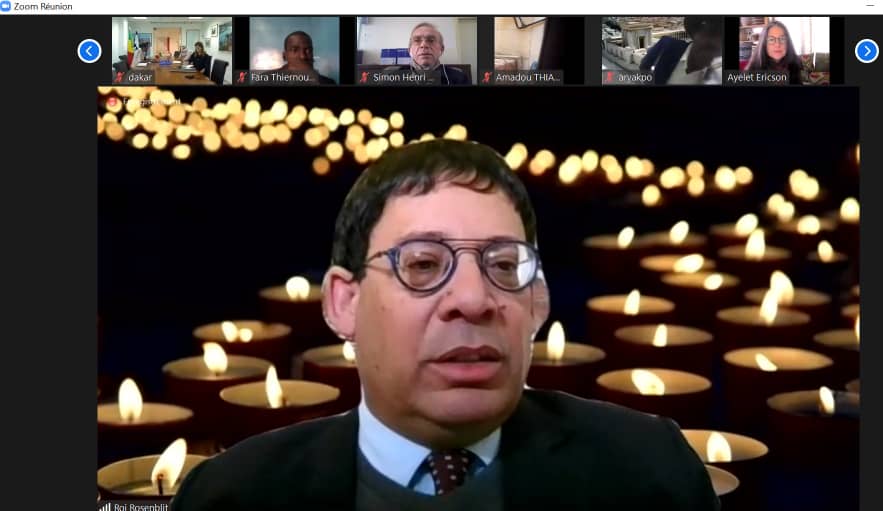
Ce, en vue de l’aider à comprendre l’histoire et ne pas tomber dans le piège de la haine. «Tous, ensemble, contre la haine !» Tel est le message lancé par son excellence Roï Rosenblit, Ambassadeur de l’État d’Israël au Sénégal. Ce dernier est revenu sur le parcours de sa famille qui fait partie de celles qui ont échappé à ce qu’il assimile à «la plus grande usine à mort dans le monde».

Guérir de cette haine est aussi le souhait du Secrétaire général de l’Organisation des Nations unies qui a également pris part à la rencontre virtuelle. Cette dernière a vu la participation de Damian Cardona- Onses, Directeur du Centre de l’Information

des Nations unies, et de Dimitri Sanga, Directeur du bureau régional multisectoriel de l’Unesco pour l’Afrique de l’Ouest-Sahel.

L’occasion a été saisie par d’autres participants pour rappeler que le drame de l’holocauste n’est pas une question strictement juive. «Ça n’arrive pas qu’à l’autre», dira l’une d’eux. Au contraire, cet évènement douloureux interpelle tout le monde. Borso Tall, travailleur sociale et fondatrice du réseau Young Advocates for Human Rights (Yahr), considère que contre le négationnisme qui nie l’horreur des chambres

à gaz et qui gagne de plus en plus de terrain, il faut initier un travail de conscientisation et de sensibilisation à travers l’éducation.

L’holocauste, dit-elle, «c’est quelque chose qu’on ne devrait plus voir dans le monde». Et pourtant, le monde a connu d’autres génocides tels que celui du Rwanda. Un autre

sombre épisode dans la mémoire collective universelle, que la réunion virtuelle a souligné ; tout en appuyant sur le fait que ces deux drames ont pour soubassement la

haine. D’où l’importance de la transmission évoquée par Roï Rosenblit.

«Les jeunes ont besoin de savoir ce qui s’est passé», dit-il.

Ainsi, après une courte vidéo diffusée à l’occasion de la commémoration, Simon Henri Goldberg, un de ceux qui se sont donné comme mission de pérenniser la mémoire

des victimes du nazisme, est revenu sur l’importance de la «gestion d’un legs moral et spirituel».

Pour lui, c’est la meilleure manière pour «apprendre aux jeunes à répondre aux manipulateurs de l’Histoire».

Moussa SECK (stagiaire) http://lesoleil.sn/

Categories
CULTURE & ACTU

La société française Groupe Duval s’apprête à construire un bâtiment commercial à Kigali.

Cette semaine, le bureau du président rwandais a annoncé la rencontre de Paul Kagame avec le PDG du Groupe Duval, Eric Duval, et son équipe, pour discuter des projets que la société envisage de lancer au Rwanda.

Le Groupe Duval est une société française fondée en 1996 par Eric Duval et dirigée par Pauline Duval. Elle compte plus de 4 000 employés et au cours des 25 dernières années, Elle a gagné 700 millions de dollars grâce à l’investissement dans les  projets de construction.

Au Rwanda, ses activités sont gérées par Duval Great Lakes Ltd dirigée par Vicky Murabukirwa, Ingénieur de formation.

Le Groupe Duval a investi dans des projets de bâtiments et travaux publics, d’hôtellerie et d’agro alimentaire parmi d’autres.

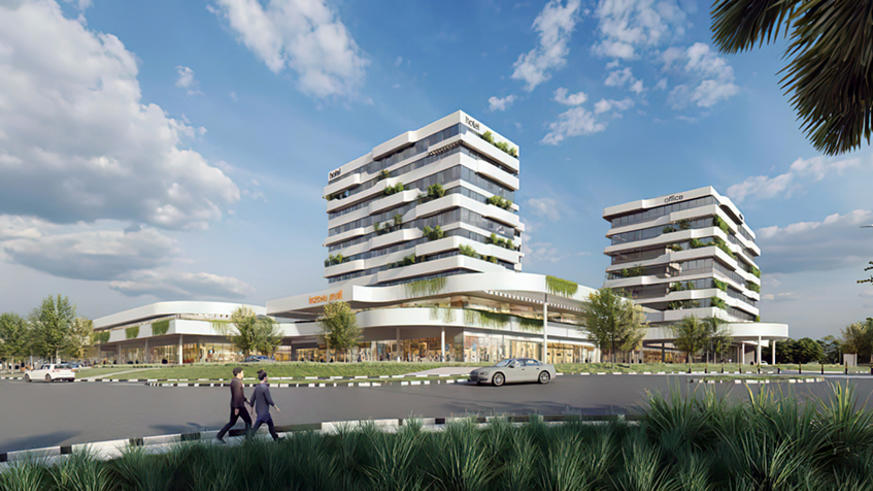
Parmi les projets de Duval Great Lakes Ltd pour le Rwanda, citons l’un des plus uniques : celui de la construction du Inzovu Mall à Kimihurura à côté du Kigali Convention Center et qui abritera des magasins de renom tels que Zara, Levi’s, Lacoste ou H&M entre autre.

Le bâtiment commercial moderne sera construit de manière à respecter les normes écologiques. Le bâtiment accueillera également la société hôtelière française Odalys City Business Apart Hotel.

Nommé «INZOVU», le bâtiment présente une variété d’activités commerciales, de jeux, de divertissements, de restaurants parmi d’autres services.

On s’attend également à ce qu’il participe a l’attraction de touristes visitant le Rwanda.

L’année 2021 verra le commencement du projet et le début travaux de construction.

La société sera également chargée de la gestion du nouveau parcours de golf qui se situe dans un quartier chic de Nyarutarama  et cette gestion se fera via UGolf Great Lakes Ltd, une filiale d’UGolf actuellement contrôlée par le Groupe Duval. 

press@hooza.rw

Categories
HOOZA MEDIA

Erik Ekudden, Ericsson Group CTO and Head of Technology & Strategy explains How Digitalization with 5G enables further acceleration of climate action

By Erik Ekudden

Digital technology may be our most powerful, scalable tool to tackle climate change. With 2020 showing digitalization can be rapidly accelerated, the same will be true when it comes to CO2 reductions. 5G opens up these new opportunities – why not use it to reach our goals faster?

With a clear challenge in global energy consumption, effects of CO2 pollution, and inefficient use of resources we need to turn to those enabling technologies that can drive change fastest. To stabilize climate change, we need to hold Earth’s temperature at 1.5°C above pre-industrial levels. This means we need to halve global greenhouse gas emissions by 2030 and reach net zero before 2050.

Even with last year’s Covid-19 driven reductions in greenhouse gas emissions – the greatest since World War II – the world is still forecast to miss its annual target of reducing emissions.

The world requires larger, more positive transformational changes than a pandemic to address climate change and meet its targets. At the same time, as we progress into 2021 and 2030 edges closer, the need for fast, scalable change only grows.

Digitalization is an enabling technology representing a fast, scalable tool to help address climate change. Indeed, digital technology may be the most powerful, scalable tool the world has to tackle climate change. As an accelerator, it has the potential to reduce global emissions by up to 15 percent by 2030.

According to McKinsey, enterprise leaders have seen the Covid-19 crisis bring about some three to four years of digital change in the space of only a few months.  In some cases, the move to digital products and channels has been accelerated by a staggering seven years. Given the investments made and expectation that changes will be long-lasting, there exists for many sectors of society a corresponding opportunity to hasten the advance of digitalization and meet 2030 CO2 milestones sooner. This hastening would be welcomed given the scale of the challenge at hand and consequences of climate change.

5G’s unique transformative capabilities

On the frontline of digitalization lies 5G, itself an exponential technology, a platform enabling technologies such as Artificial Intelligence (AI), the Internet of Things (IoT) and Extended Reality (XR). Through these technologies, enterprises can build all-manner of known and future unknown, disruptive uses.

The uses, applicable across various sectors, can drive down costs, energy usage, emissions, waste and mitigate climate change. Perhaps the most obvious use during Covid-19 has been video conferencing and telemedicine in employment and health sectors, which negated travel.

The Exponential Roadmap, revised in January 2020 prior to Covid-19’s onset, shows from now until 2030, sector by sector, the solutions to be taken to help the sectors halve their greenhouse gas emissions by 2030. The Roadmap, of which Ericsson is the leading business sector partner, is consistent with the Paris Agreement’s goal to keep global average temperature “well below 2°C” and aiming for 1.5°C above pre-industrial levels.

Across sectors, including those highlighted below which might be ripe for acceleration, the Exponential Roadmap puts forward concrete solutions to meet 2030 targets. Technology lies at the heart of many of the solutions. Their deployment, however, requires policies, finance and leadership to see them realized at sufficient speed and scale.

If we establish 5G infrastructure faster, we can help halve emissions across sectors. 5G is an innovation platform which can support a myriad of uses that can help tackle climate change.

Exponential Roadmap: Solutions to cut greenhouse gas emissions in industry, buildings, transport and energy

The solutions are not hypothetical, they just need to be scaled up. Looking at energy, when it comes to enabling the transition to renewable sources, investment in the smart grids of tomorrow is necessary. ICT and connectivity can enable better performance and protect power grids, including the possibility of remote control and automation in the event of power failure. This is key in enabling the transition to renewable energy, and where the UN estimates that up to 85 percent of electricity must be renewable by 2050.

Taking steps in energy will impact the emissions of other sectors too, where the Exponential Roadmap finds around a third of industry emissions relates to energy supply, rising to two thirds in buildings, for example.

Under transport it is reasonable to assume that the solution ‘remote working and meetings’ will hit its estimated target well before 2030, given the rampant uptake of teleconferencing this past year. Ericsson’s trial last year of 5G driverless vehicles and 5G uses at the Port of Livorno, are also instructive.

In industry, is it not possible to act faster and bring forward increases in production efficiency and circularity? We know digital technologies will be an essential driver of decarbonization and cost savings in material, energy, process and logistical efficiency.

In buildings, such as Ericsson’s Smart 5G Factory launched last year, we see uses such as energy monitoring and management shave 5 percent off the energy bill, whilst environmental monitoring can lead to a 5 percent reduction in waste. All told the factory is 24 percent more energy efficient than baseline. Is it then possible to speed up the transition to sustainable buildings, both residential, non-residential and construction? Can we hit the sector’s reductions before 2030?

Collective major leaps

I believe the potential is there to meet 2030 milestones sooner. It would require a major, collective leap led from industries and investors, but strongly supported from society at large, where governments, academia and others pull together.

From an industry perspective, telecommunications companies need to lead by action. For Ericsson, this means supporting the Paris Agreement, the Science Based Target Initiative, driving changes through our supply chain. It also means, as a lead partner of the Exponential Roadmap, working towards the ambition of halving our emissions before 2030, aiming at net zero before 2050. In addition, it means showing the art of what’s possible, through research, proofs of concept and working case studies, such as the Port of Livorno, Smart 5G Factory and many other projects. More than anything, our main contribution is taking forward networks that society can utilize to help tackle climate change. The networks themselves are designed with energy efficiency in mind. If 5G were deployed the same way as previous generations to meeting growing traffic demands, energy consumptions of mobile networks would increase dramatically. This is why we break the rising energy curve of the networks through, for example, energy-saving software and placing equipment with precision.

For society to take a great leap, however, requires more than a willing industry and exponential technologies like 5G. It requires other leadership – not least governmental – as well as policies and incentives to deliver digitalization now, paving the way for the necessary reductions well before 2030.

Governmental leaps

A critical ingredient to deploying the 5G network is an investment friendly environment. In concrete terms, this means governments removing barriers to 5G deployment such as fast-tracking permits, lowering site costs and setting fees that cover only administrative costs. It also means freeing up or finding sites for equipment, which is an issue across the Americas and Europe.

In addition to deployment, it means releasing 5G spectrum quickly, with supply maximized and assigned in a manner that incentives wide and rapid deployment. In Europe, for example, only 25.5 percent of 5G spectrum has been released to member states. The slow release is, in large part, due to a near-sighted focus on gathering industry fees and taxations, rather than harnessing the overwhelming long-term benefits – financial, societal, environmental – of releasing spectrum sooner and getting enterprises up and running on 5G quicker. Since 2000, European operators have spent EUR160bn on spectrum fees which could have covered the EUR155bn investment shortfall the European Commission calculates is needed to meet its 2025 connectivity targets.

There are best practices to learn from. Austria, for example, in their recent multi-band spectrum auction, used additional coverage obligation discounts to drive down costs. Total proceeds were 20 percent lower than the expected minimum, representing a trade-off value of EUR500m. Critically however, 1,700 undeserved communities will now get 5G. The auction was designed to secure coverage, not only for a high percentage of the population but also highways, roads and railway routes.

The positive environmental impacts in those communities and along transport and infrastructure routes will be felt for years to come. This shows that the much-needed green transition can be accelerated by governments if an investment friendly climate for digital infrastructure is provided.

The learnings from 2020 tell us that digitalization, underpinned by mobile network services and cloud technologies, can be accelerated by years. Across many sectors of society, the same will be true when it comes to CO2 reductions. 5G opens up these new opportunities – why not use it to reach our goals faster? I challenge governments and our sector to join me in this critical ambition.

Read the original story here:

Categories
HOOZA MEDIA

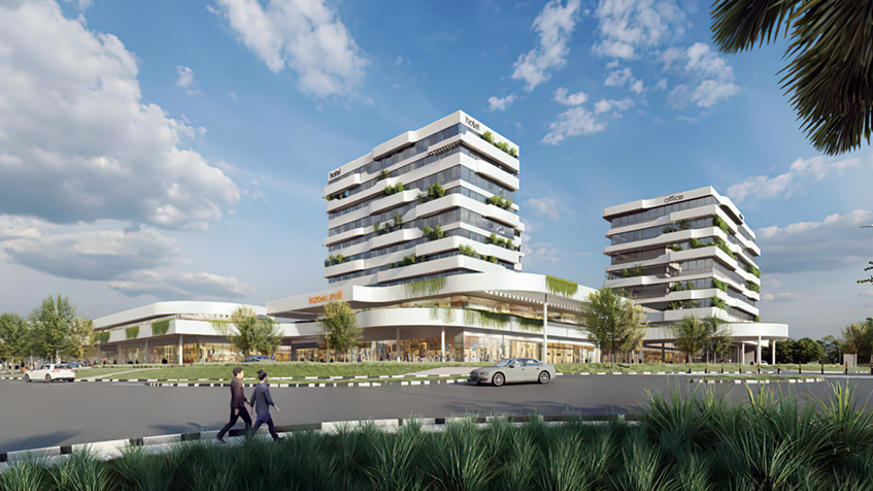
French Company “Groupe Duval” sets to construct an Environmental Friendly Commercial building Near Kigali Convention Centre

On Tuesday, the Office of the Rwandan President announced that President Kagame had received the CEO of Group Duval, Eric Duval, and his team, to discuss the projects the company plans to launch in Rwanda soon.

Groupe Duval is a French-based company, founded in 1996 by Eric Duval but managed by Pauline Duval. It has more than 4,000 employees and over the past 25 years, it has raised more than $ 700 million from construction investment.

In Rwanda its activities will be managed by a company called Duval Great Lakes Ltd headed by Vicky Murabukirwa.

Groupe Duval has invested in construction projects, hospitality, food processing and more.

Among the projects Duval Great Lakes Ltd plans for Rwanda include one of the most unique to construct a commercial building in Kimihurura next to the Kigali Convention Center, TOP Africa news has learnt from IGIHE.COM.

The modern commercial building will be constructed in a way that is environmentally friendly. It will also include the French Hotel Company, Odalys City Business Apart Hotel.

Named “INZOVU”, the building will feature a variety of business activities, games, entertainment, restaurants and more.

It is also expected to be a bridge to increase the number of tourists visiting Rwanda.

This year is expected to be the start of the project, where construction work will be fast-tracked.

The company is also set to take over the management of the new Golf Course through UGolf Great Lakes Ltd, a subsidiary of UGolf which is currently controlled by Groupe Duval.

Read the original story here: